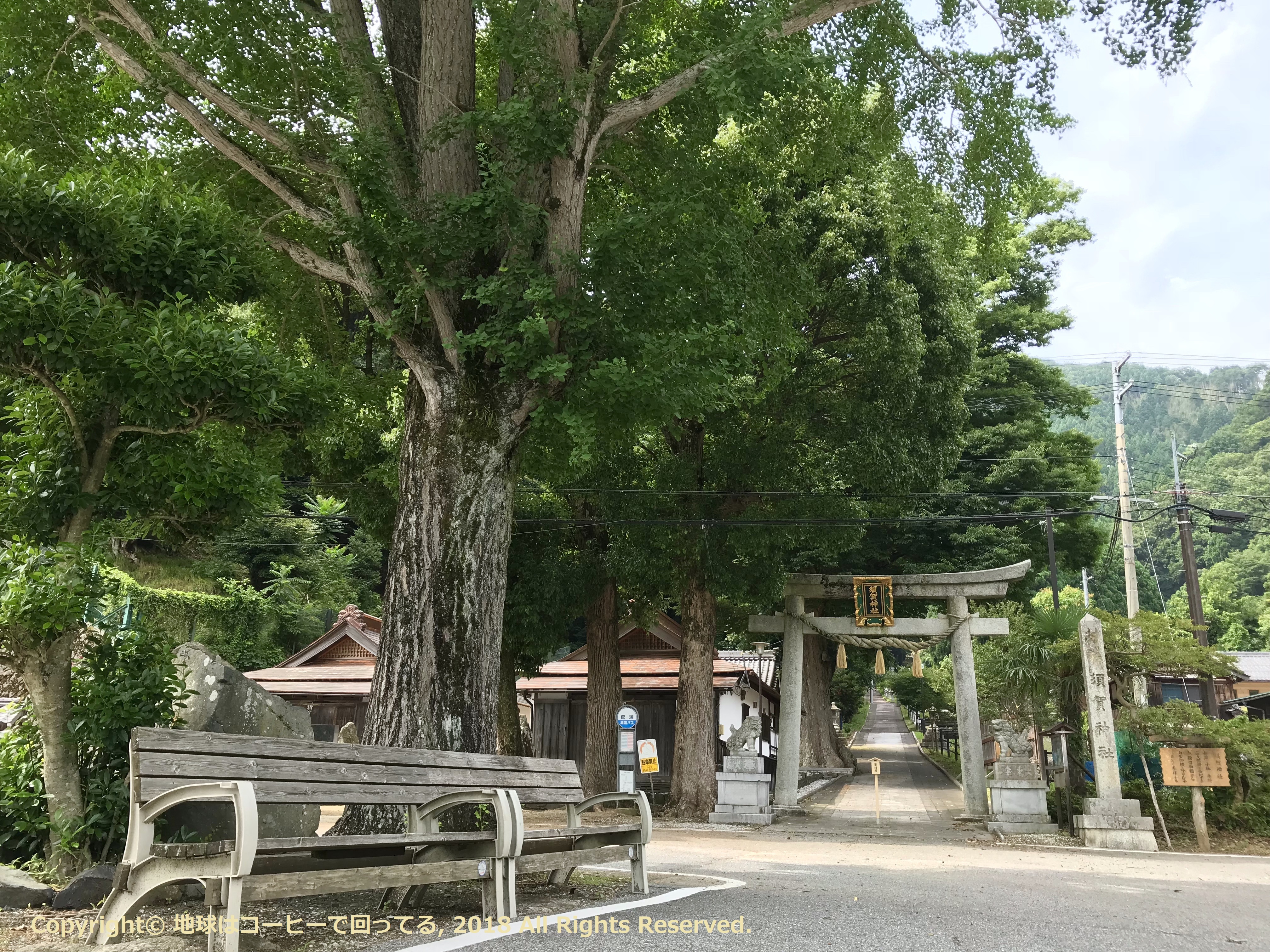
Great ginko tree and the entrance gate of Suga Shrine
Looking for an authentic slice of Japan away from the crowds? Welcome to Sugaura (菅浦), a secluded lakeside village in Shiga Prefecture, nestled on the northern shores of Lake Biwa—Japan’s largest lake.
Just 90 km (55 miles) northeast of Kyoto, this charming village has preserved its traditional lifestyle, historic architecture, and cultural heritage for over a thousand years. Here’s why Sugaura deserves a spot on your travel itinerary.
Top 5 Reasons to Visit Sugaura
- Immerse yourself in a peaceful, traditional village just 110 minutes from Kyoto
- Explore the pristine natural beauty of northern Lake Biwa (Okubiwako)
- Discover Sugaura’s fascinating local history and cultural treasures
- Admire centuries-old architecture and design
- Savor authentic Japanese cuisine featuring fresh local catch
AD
Check out mobile Wi-Fi router package for Japan trip!!
Suga Shrine (須賀神社)
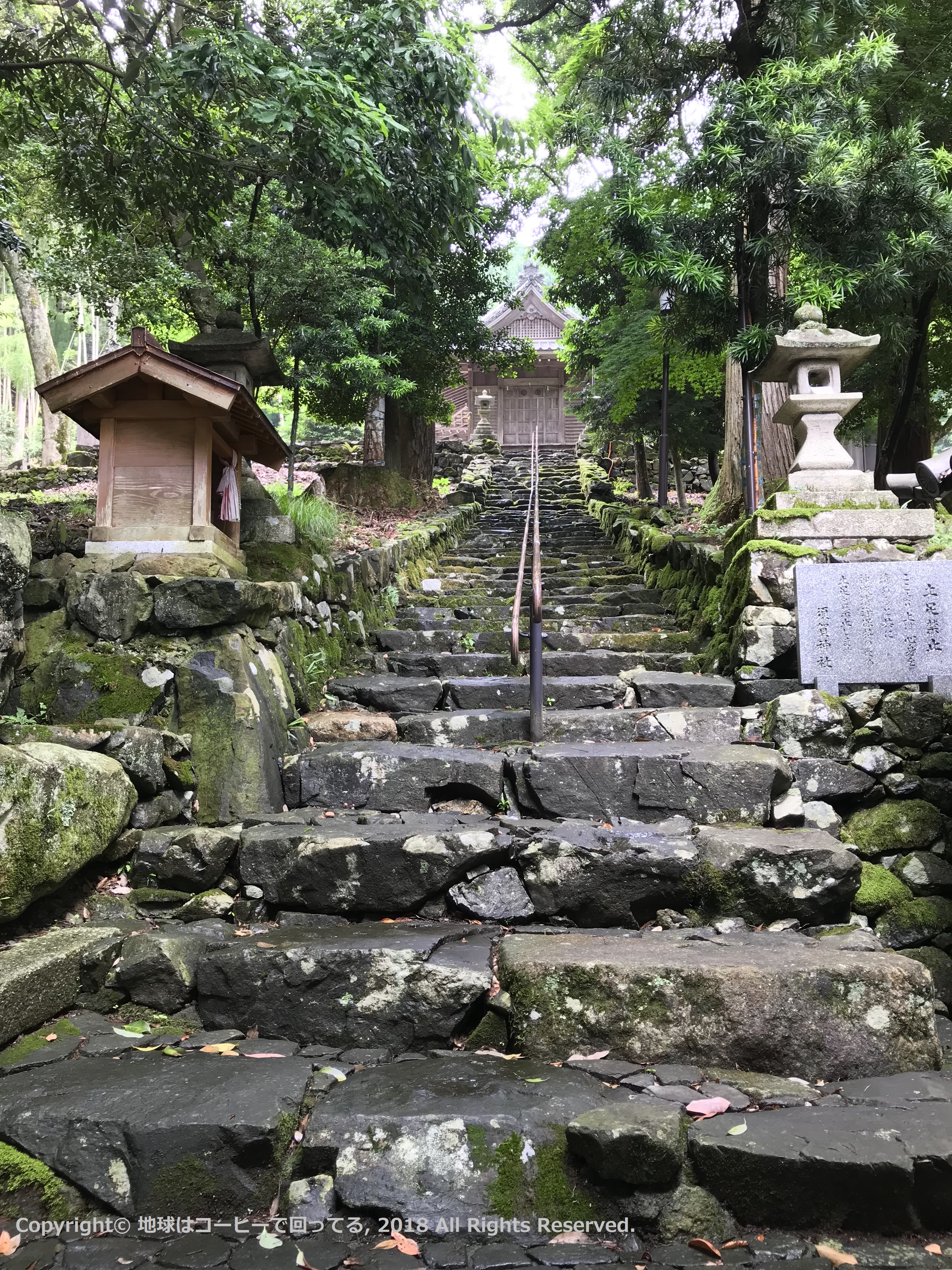
Staircase leading to haiden. No shoes allowed.
Built: 764 A.D.
Location: Suga Shrine
Perched on a hill and surrounded by lush greenery, Suga Shrine is the spiritual heart of Sugaura. A stone path leads from the lakeside to the chozuya (purification fountain), then up moss-covered steps to the haiden (hall of worship).
Important: Remove your shoes before entering the sacred area—slippers are provided free of charge.
Originally three separate shrines—Kobayashi Shrine, Akasaki Shrine and Hora Shrine—were merged in 1909 following the government’s Shrine Merger Order. Behind the shrine lies a tumulus believed to be the imperial mausoleum of Emperor Junnin (733-765). In 2013, Suga Shrine celebrated its 1,250th anniversary, and its grounds remain beautifully maintained.
As you walk in serene silence, you’ll feel the weight of centuries of history preserved in this tranquil village.
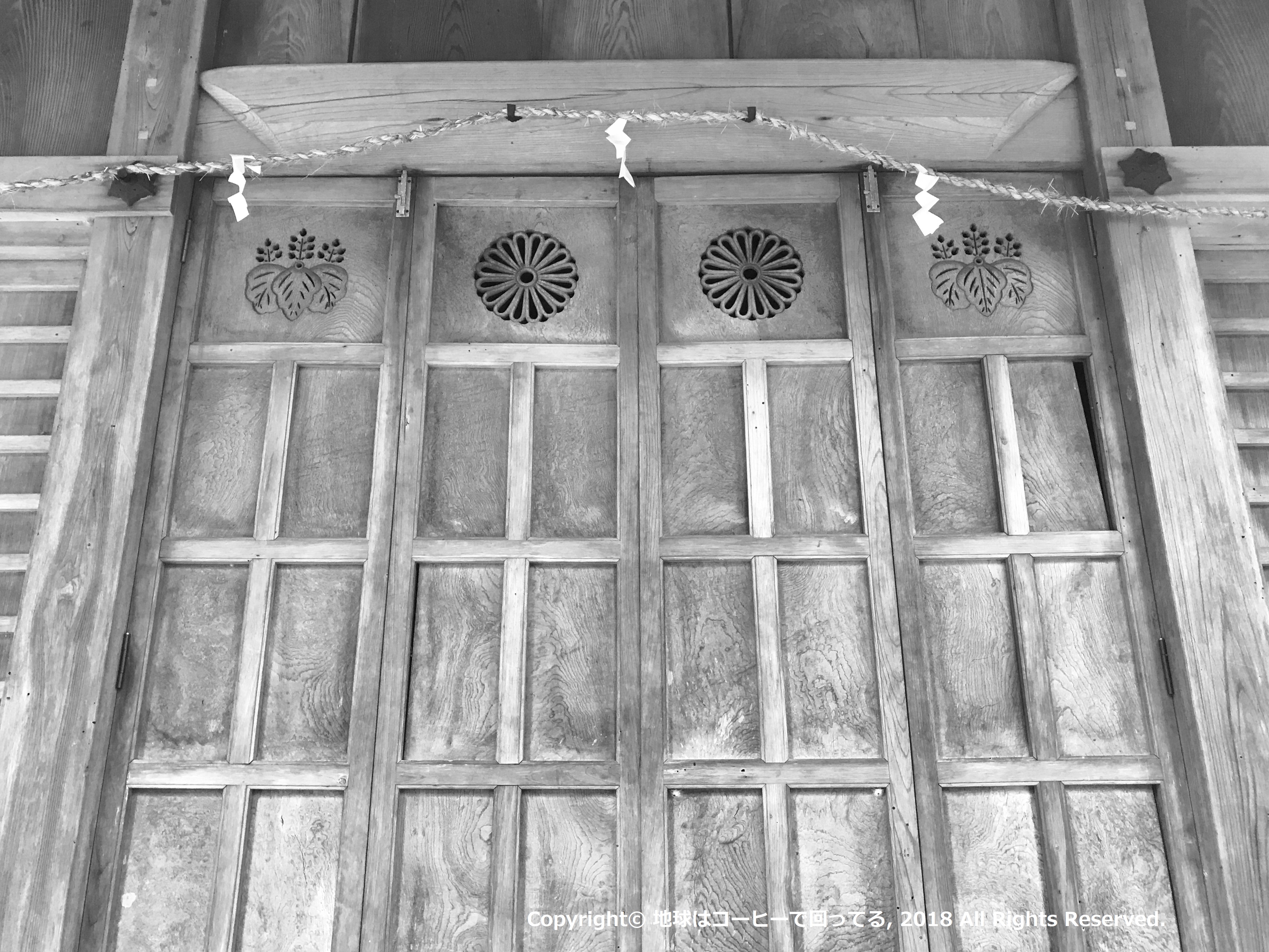
Emblem of Imperial chrysanthemum and 5-7 Paulownia
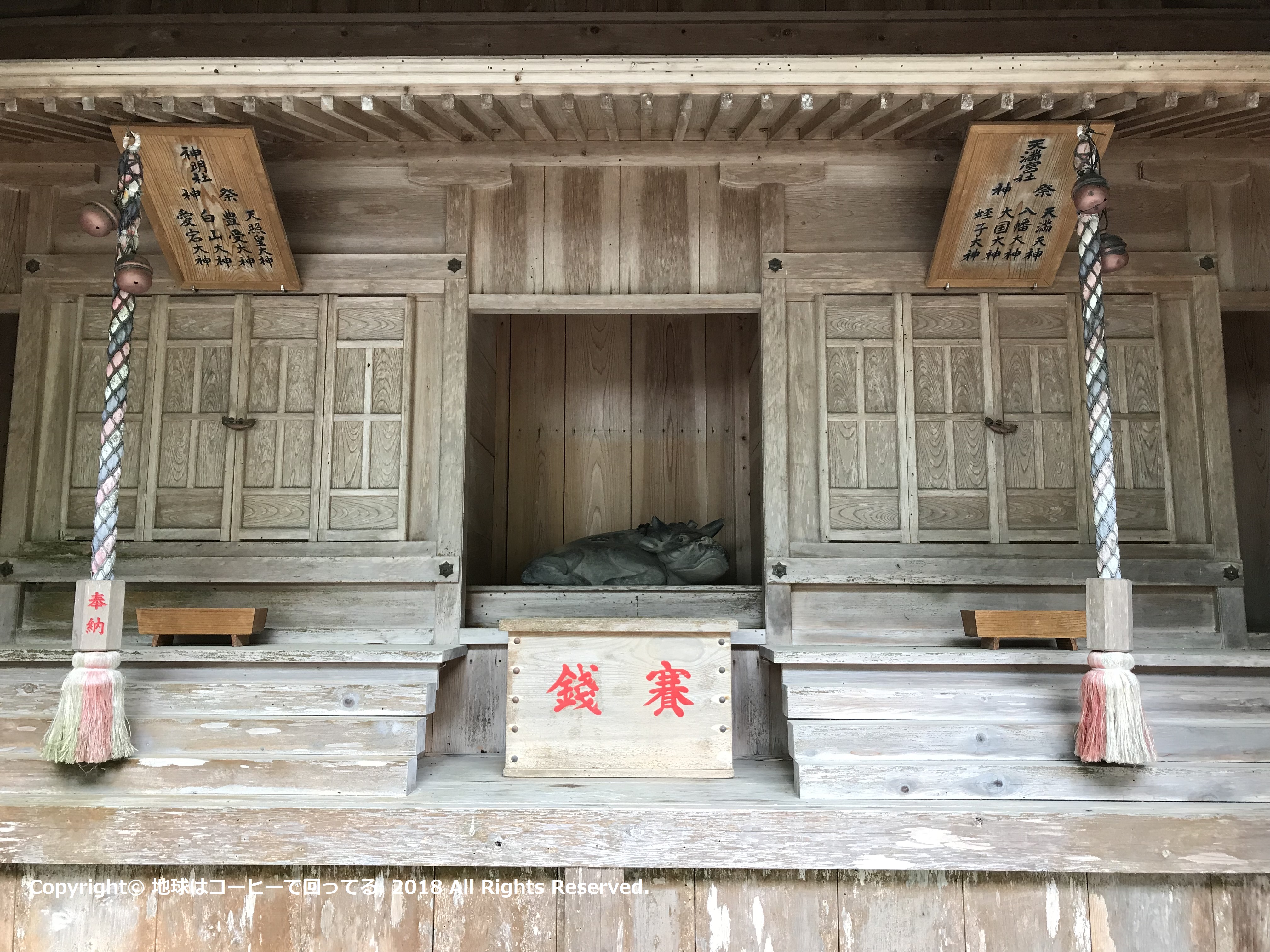
Western sanctuary -Kobayashi and Akasaki Shrine
Note: This Suga Shrine is not the one featured in the popular anime “Your Name” (君の名は。) There are over 20 Suga Shrines across Japan.
Local Museum (菅浦郷土資料館)

Looking at Lake Biwa from halfway along the shrine path
Hours: 10:00-16:00 (Open only on Sundays)
Entrance Fee: Adults: \300, Children (under 12): \100
Location: Local Museum
Halfway down the shrine path, you’ll find the Local Museum, open only on Sundays and run by local residents. Inside, you can view historic artifacts such as munefuda (ridge plaques), ema (votive tablets), and resources about Sugaura’s unique governance system.
What is a ‘So village’?
Sugaura was once a So village (惣村)—a self-governing community common in medieval Japan. Few records of this system survive today, but Sugaura preserved its complete historical documents, known as Sugaura monjo (菅浦文書). These invaluable records detail village life, rules, and governance, earning designation as a National Treasure in 2018. While the originals are kept at Shiga University, copies are on display at the museum.
Four-Columned Gates (四足門)
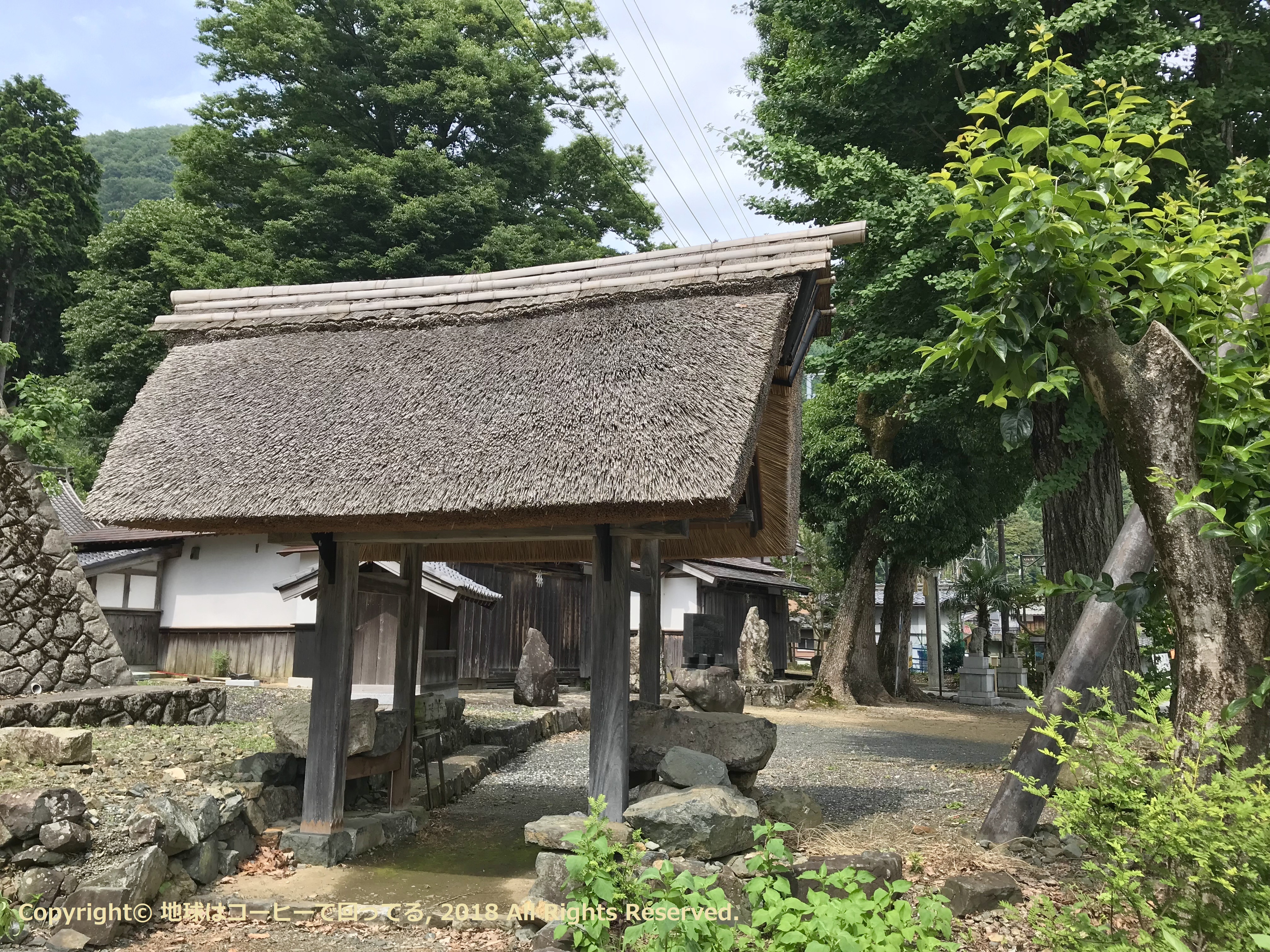
Western Gate
Location: Four-Columned Gates
To protect its autonomy, Sugaura built wooden gates at both ends of the village—the Western Gate (西の四足門) and Eastern Gate (東の四足門). These gates marked the boundary between the self-ruled community and the outside world. Crossing them meant entering Sugaura’s own judicial and administrative system during its So village era.
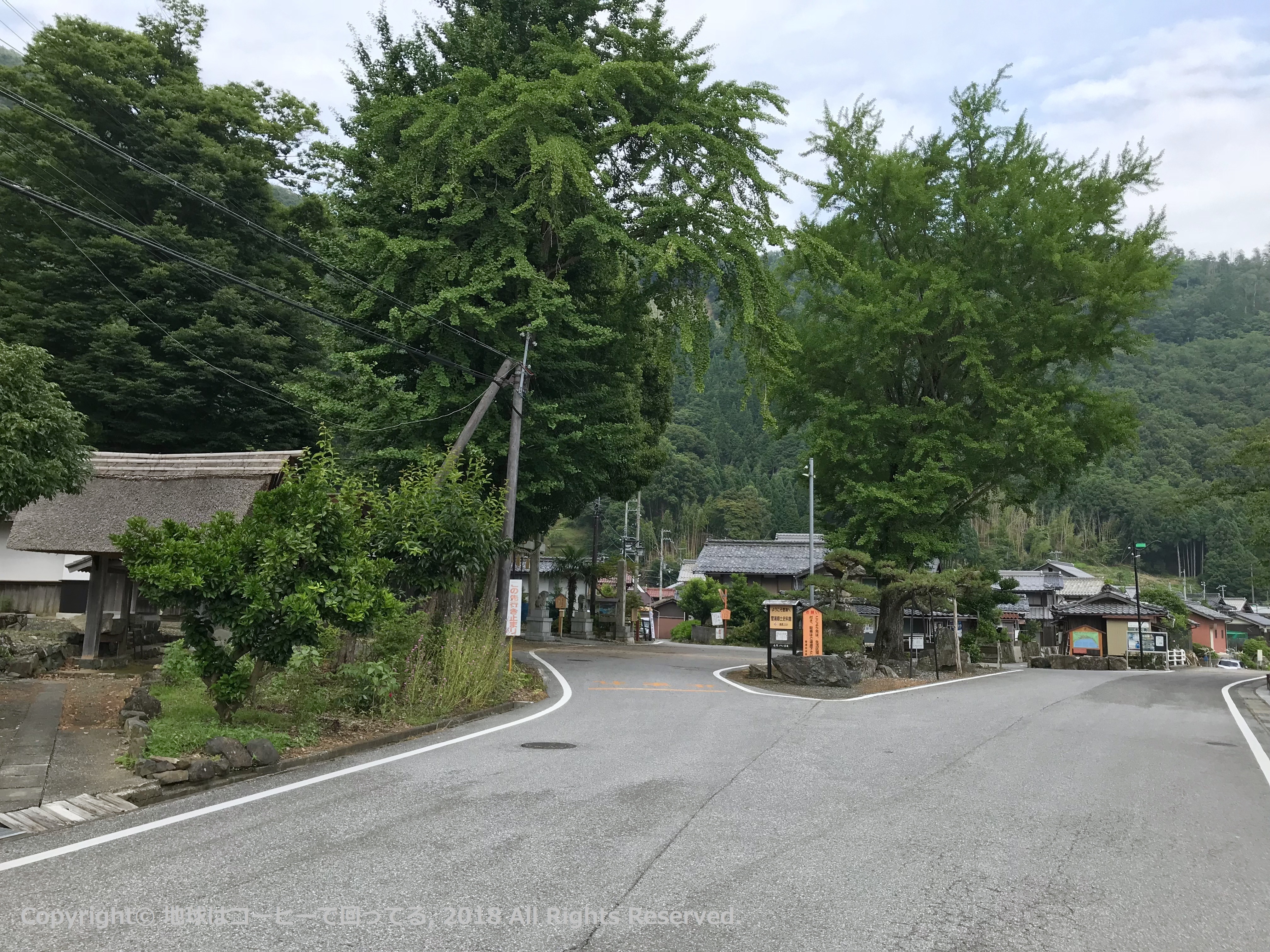
Western Gate is seen on the left
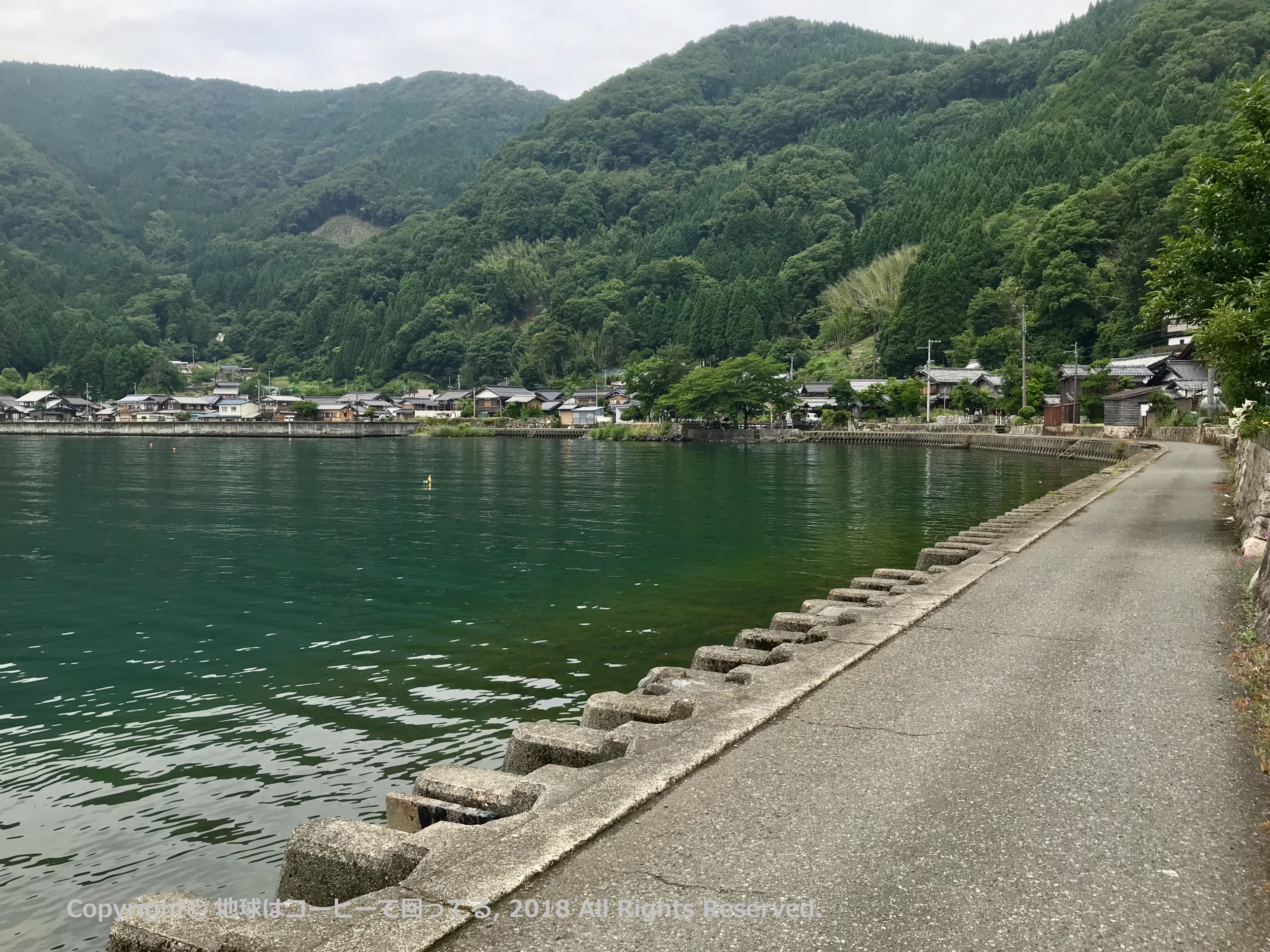
Looking at Sugaura from eastern end of the village
Where to Eat & Stay
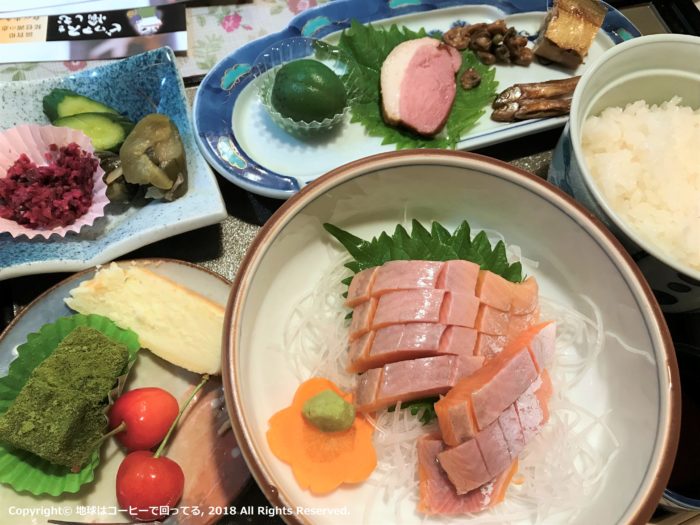
Set meal with ‘Biwa-masu‘ (Biwa trout) sashimi @Sakichi
Kappo ryokan Sakichi (割烹旅館 佐吉)
Hours: 12:00-15:00 / 17:00-22:00 (No scheduled holidays)
Phone: 0749-89-1165 (Japanese)
Website (Japanese): http://www.zc.ztv.ne.jp/dvs2xecu/
Location: Kappo ryokan Sakichi
Since 1945, this cozy kappo ryokan has served seasonal dishes featuring Lake Biwa’s local catch—ayu (sweetfish), sansai (wild vegetables), and more. Set menus start at around \1,500 (plus tax & service charge). Don’t miss Biwa-masu (Biwa trout), a rare delicacy found only in Lake Biwa. Its tender, fragrant flavor rivals salmon and melts in your mouth. Seasonal specialties include kamo (duck) and suppon (soft-shell turtle).
As a ryokan, Sakichi also offers accommodation for those who want an immersive stay.
Tsuzurao (つづらお) /Closed
Phone: 0749-89-0350
Website (Japanese): http://www.tsuzurao.com/index.html
Location: Tsuzurao
Originally, this hotel started their business as kokumin-shukusha Tsuzurao (Lodge operated by local government) in 1975. The rooms are Japanese style with beautiful lake-view of okubiwako. Depending on the season, they have variety of activities for the guests. And of course, they offer Japanese dining serving local catch and the famous Omi-gyu beef.
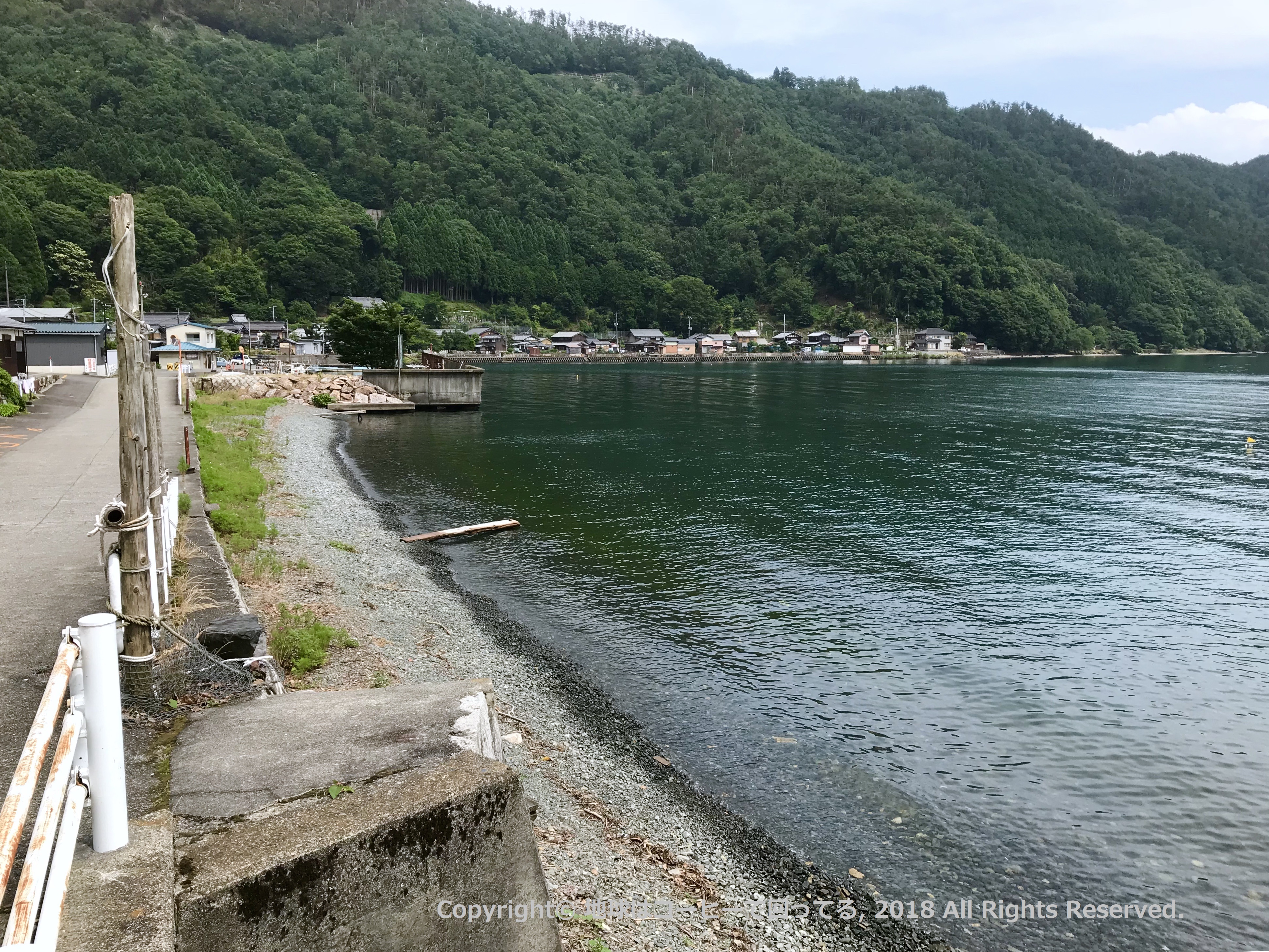
Lake shore of Sugaura stretching towards east
DAD
Getting There
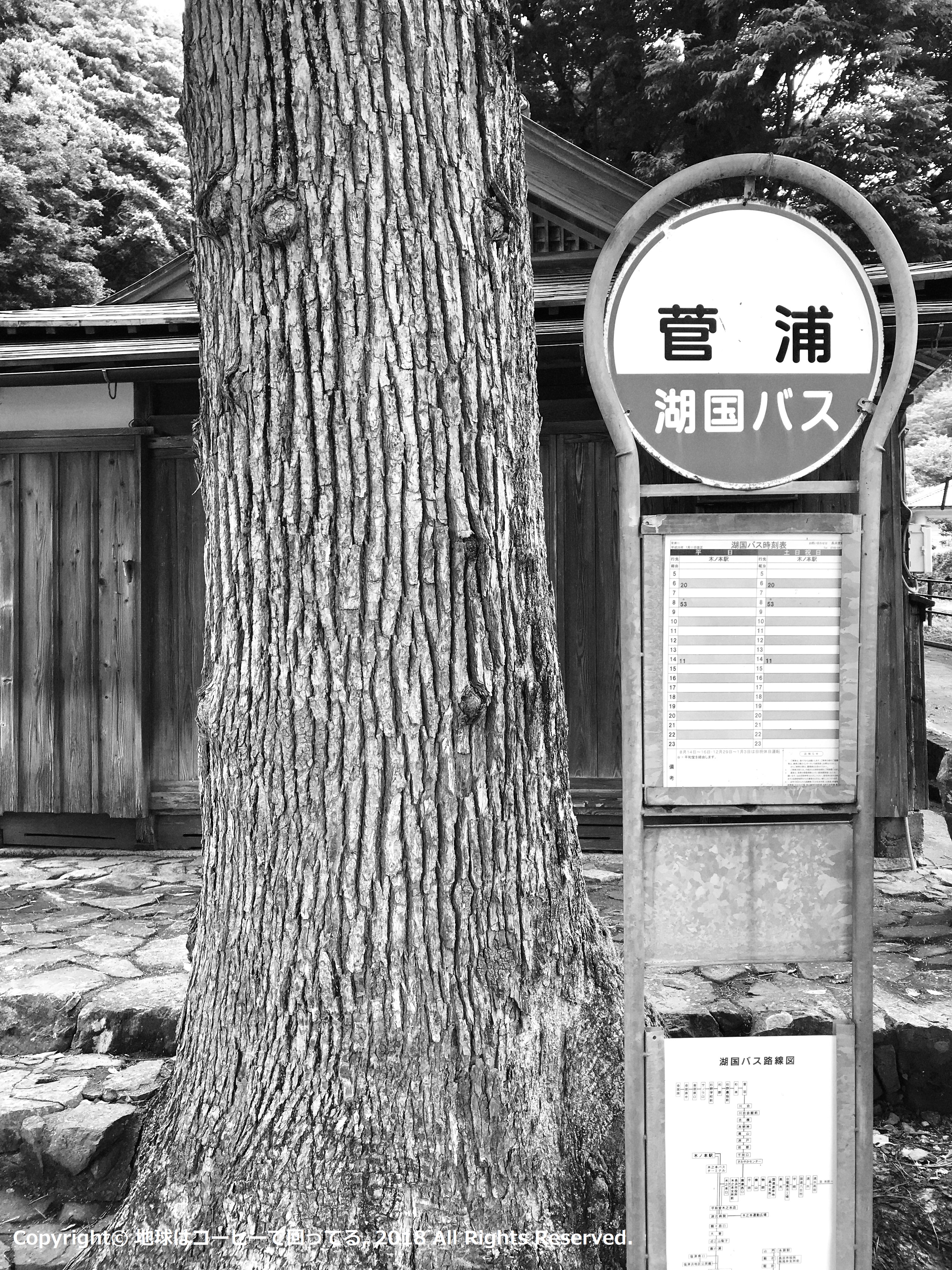
Buses come to Sugaura 3 times a day
The easiest way to reach Sugaura is by car. Enjoy scenic coastal roads and park near the public toilet by the Sugaura bus terminal.
Public transportation is available but limited:
- Nearest Station: Nagahara Station (JR Kosei Line)
- Bus: Omi-Railway Bus to Sugaura (approx. 30 min, \430 per adult)
Location:Nagahara Station
Alternatively, you may take Kokoku Bus from Kinomoto Station (JR Hokuriku Line). It takes about an hour to reach Sugaura and fee is \820 per adult.
Location: Kinomoto Station
When to Visit
Sugaura shines in every season:
- Spring: Cherry blossoms along Lake Biwa’s coastal road
- Early Summer: Streams sparkle with fireflies
- Autumn: Mountains ablaze with vibrant reds and yellows
- Winter: Snow transforms the village into a serene ink painting
Unlike crowded tourist spots, Sugaura offers a rare glimpse into Japan’s authentic rural life—a peaceful escape that will leave you with unforgettable memories.
(Nov. 29, 2018: Title and text amended)
(Aug. 10, 2020: Information updated)
(Dec. 31, 2025: Title and text amended)